
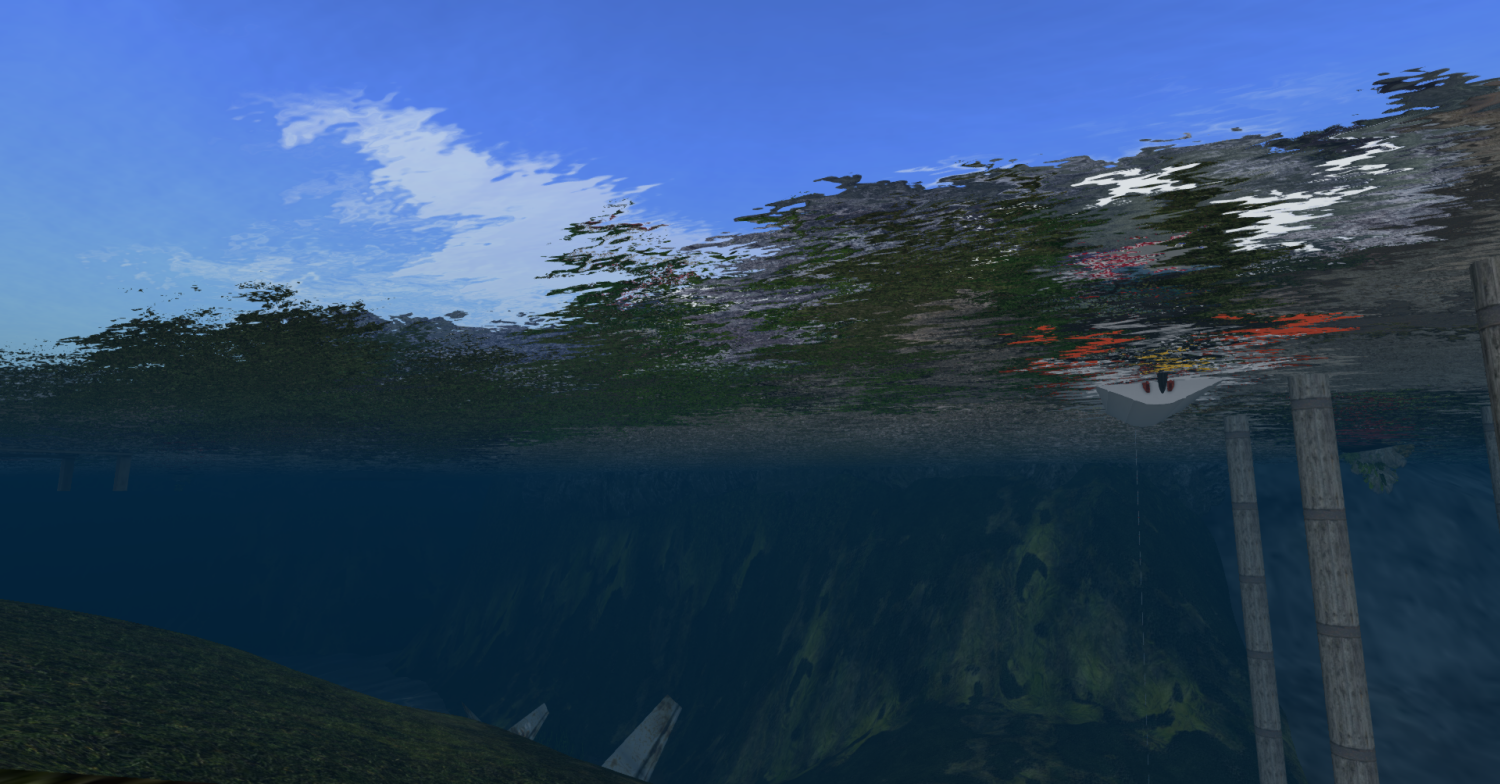

Aquatics
The Aquatic lore has been comprehensively rewritten to be included as part of the Cinnidh. However, we understand that this change may be jarring to those who started their journey with Eclipse Ridge as an Aquatic.
From November 1st to December 1st, 2025, we provided an opportunity for current Aquatics players to apply for grandfathered status as Aquatic cryptids. If you did not reach out to staff or submit a ticket by the December 1st deadline, we’re sorry but you will need to select a different available species moving forward.
Aquatic cryptids are asked to continue playing their characters as the original species was written. If you have any questions about your character please submit a ticket in Discord or contact a staff member.
Grandfathered Rules:
- You may only grandfather in one character
- Grandfathered status only persists through continued play. If you become inactive (without communication to staff) or actively leave the sim (drop groups, discord, rentals, etc.) you forfeit your grandfathered status.
- You are to follow the Aquatic lore as it was written. If you would like to see a change, you can submit a ticket with the request and we will see if can incorporate it. (Please note: Siren song will be available to the grandfathered Aquatics. A rewrite on the ability will be available later in December.)
Lurking beneath the surface in lakes, rivers, bogs, and oceans lay a species as old as mankind itself.
The Aquatics have been given many names by their human cousins, the Merrow, the Ceasg, Merfolk, Sirens, Kelpies, and Undine – Regardless of the name, Aquatics have been feared and revered in equal measure for millennia; both in their mercy and their savagery.
As diverse as all sea life itself, Aquatics come in many forms and appearances, what they share in this is their natural half-pisces, half-human form
Culture
Beliefs
The origins of the Aquatics are unclear, although some of the earliest myths, both oral and written, span from the Celtic societies of Scotland and Ireland and the Mediterranean tales of the Greeks, where sailors and fishermen would share tales of creatures with half-fish half-human bodies.
Described in equal measure as either beautiful beings or hideous monsters, Aquatics were similarly attributed with tidings both good and ill; either luring sailors and shoremen to their untimely deaths or as heralds of good fortune. In reality, Aquatics have coexisted with the world’s other species for longer than recorded history; often as the very sailors and longshoremen so superstitious about their presence. With a natural affinity to bodies of water, Aquatics have spread across the world, from the largest oceans to the smallest lakes and rivers.
Mating
An individual must be born an Aquatic, inheriting his or her status from one or both parents. If a child is born to an Aquatic parent and a member of another species, the offspring will either be Aquatic or fully embody the characteristics of the other species. The onset of abilities is from birth with the first transition happening by the age of one. It is rare for late manifestation, and if occurred it is most likely to happen to someone with only one Aquatic parent. The maximum age for manifestation would be between 5-8 years old.
Aquatics are immune to werewolf or vampire transformation. If an Aquatic is bitten, they will become gravely ill and eventually succumb to their ailment if left untreated.
Blooms
In light of the risks posed by fishing, poaching, environmental pollution, and predators, it is often advantageous for Aquatics to establish alliances or familial units, commonly referred to as blooms. While certain individuals prefer a solitary existence or form partnerships, the majority recognize the benefits of collective action in ensuring their survival and well-being.
Characteristics
Like many supernatural, many Aquatics have integrated themselves into human society, choosing to live and work in tandem with them, returning to the waters on the Full Moon. However, similar to the Fae, there are sects of Aquatic culture that remain deeply distrustful of their human counterparts after centuries of persecution and hunting, enhanced only by mankind’s savage hunger for the bounty of the sea.
Industrial fishing, pollution, and global warming have destroyed many traditional habitats for the Aquatics, forcing some to become hateful of mankind, with a number turning to their fearsome reputation as a guide – Hunting, luring, and devouring fishermen and sailors. These so-called ‘Flotsam’ hold a disgust for their integrated counterparts, disdainfully referring to them as ‘Lubbers’.
Appearance
Aquatics are as varied in spectacular color as the sum of life under the waves; however, they maintain a common trait when submerged – A distinctly human torso, with a long fish-like tail.
Due to irregular spawning intervals and the rarity of producing more than one offspring at a time, most Aquatic species have adapted to live exceptionally long lives, reaching up to 300 years. This extended lifespan is crucial for their survival and ensures the continuation of their species.
Whilst in their ‘True Form’, they possess gills that allow them to breathe underwater, with shimmering scales extending from their waist in a seamless transition from tail or torso. Some Ocean-dwelling Aquatics possess webbed fingers to propel them through the deep seas.
On land, they appear as humans in almost all regards, their tails giving way to legs in a brief metamorphosis.
Aquatics who have spent extended periods of time underwater may become augmented by the sea life around them; either through long streams of kelp and seaweed or by barnacles, crustaceans, and other symbiotic life forms.
Abilities
- Aquatic habitation – Aquatics possess intricate internal structures that enable them to thrive and adapt to diverse underwater environments. These structures allow them to withstand extreme water pressures and temperatures. Aquatics are known to inhabit the deepest parts of the oceans and lakes, specifically, the mesopelagic and bathypelagic zones, which extend from 200 meters to 4,000 meters below the surface. These zones present unique challenges due to the high pressure and extreme temperature variations. However, aquatics have remarkable adaptations that enable them to thrive in these challenging conditions.
- Diadromous – Aquatics possess the ability to move from bodies of salt water into fresh water, although the process is extremely unpleasant and weakens the Aquatic for an extended period. In order to make the transition from saltwater to freshwater, the Aquatic must undergo a period of acclimatization, during which they must either expel or collect salt from the environment; their gills must adapt, as must their internal organs, with particular note to agonizing kidney pain, akin to acute kidney failure. Many Aquatics, particularly the Elders of their species, must pick an environment to live in while their bodies are still able to make the change, otherwise, the effort will almost certainly kill them.
- Neurotoxin – Aquatics possess the ability to produce a powerful neurotoxin that can be administered through a bite in either Aquatic or human form (although far less potent in human form). In Aquatic form, a bite from their needle-like teeth quickly renders a victim paralyzed by interfering with signals from the central nervous system to the rest of the body, causing a quickly increasing paralysis of all the major muscle groups. At low doses, the neurotoxin can induce nausea, vomiting, abdominal pain, and a burning sensation in the extremities; as well as shortness of breath, confusion, slurred speech, and a lack of coordination. At higher doses, this can result in asphyxiation, partial or complete paralysis, memory loss, or even death.
Vulnerabilities
- Pollution – Aquatics are highly sensitive to changes in their environment; accidental or deliberate pollution of their waterways can have disastrous consequences for the Aquatics living there; often resulting in serious poisoning, sickness, or death. Noise pollution has also become an increasing threat to Aquatics, with the proliferation of sonar and deep-sea industrial operations causing harmful repercussions for Aquatics unlucky enough to be nearby.
- Dehydration – Aquatic creatures, dependent on their aquatic habitat, require regular hydration to maintain their well-being. Ingesting water or participating in water-related activities fulfills this need. Neglecting hydration can result in dehydration, a serious condition that, if left untreated, can lead to severe illness or even death in extreme cases.
- Lead – Prolonged exposure to lead, whether through ingestion or touch, poses a significant threat to Aquatics. Lead poisoning can impair sensory, motor, and cognitive functions, and if left untreated, can ultimately result in mortality.
Full Moon Effects
Aquatics are vulnerable during the full moon. Under the full moon’s enchanting allure, they fall into a trance-like state. Standing outside on a full moon night, gazing directly at its luminous beauty, or simply catching its treacherous reflections on surfaces such as water, glass, mirrors, and liquid-filled bowls can trigger. Their behavior takes strange turns as they stray from their true selves. Some transform into sirens, luring unsuspecting souls to a watery demise, while others adopt monstrous appearances, becoming highly aggressive.
To evade potential capture or entrapment, the majority seek refuge in the deepest regions of the closest body of water or seclude themselves in darkened rooms. Conversely, some individuals choose not to conceal their authentic nature and disregard caution.

